
Illinois Law Shielding Public Officials’ Personal Information Raises Transparency Concerns
TL/DR –
Illinois has passed a law allowing public officials to remove their personal information, including home addresses and marital status, from public view over concerns about politically motivated violence. However, critics argue that the law, which makes no exceptions for journalism or political speech, could limit voters’ ability to scrutinize those in power and weaken their right to know. The law applies to a wide range of officials and anyone who unlawfully publishes an official’s personal information online could face a felony charge and prison sentence.
Illinois Law Shielding Public Officials’ Personal Information Raises Accountability Concerns
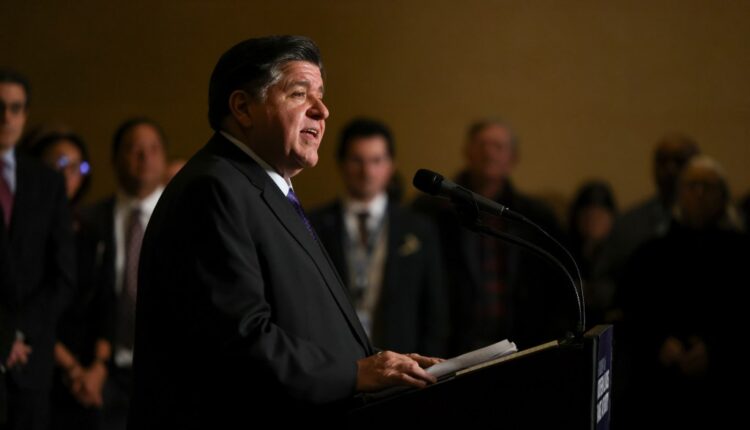
In response to growing anxiety over politically-driven violence, Illinois lawmakers swiftly approved a comprehensive law allowing public officials to keep their personal details private. The legislation, signed last month by Governor JB Pritzker, presents potential barriers to democratic oversight as it includes vital information like marital status and residence.
The law has sparked debates about freedom of speech and public accountability. Critics argue that its scope is too wide, extending beyond just protecting public officials. Transparency advocates warn that the new law threatens democratic oversight and the public’s right to scrutinize those in power.
The legislation requires government agencies, businesses, and individuals to redact and refrain from sharing personal information of many current and former officials, unless these officials aim to seek office. This personal information includes home addresses, phone numbers, personal emails, and even marital status. There is no explicit exception for journalistic or political speech, and the law applies retroactively.
Carolyn Hendrie, Executive Director of the Society of Professional Journalists, believes the statute hampers public interest reporting crucial for holding officials accountable. “This statute goes too far in chilling the public interest reporting that needs to be done so that public officials can be held accountable,” said Hendrie.
However, the law’s proponents argue that it reflects an escalation in political hostility and violence. The law was modelled after a 2012 measure that allowed judges to request the shielding of their personal information, following the 2005 killings of a U.S. District Judge’s husband and mother by a disgruntled litigant.
The law applies to various public officials and their families, with violations potentially leading to felony charges, and a sentence of two to five years in prison. Despite this, Carolyn Iodice of the Foundation for Individual Rights and Expression warns that the law’s structure is vulnerable to misuse. “The law is extremely amenable to abuse for those purposes,” she says.
The law could have impacts beyond residency issues. By defining marital status as personal information, officials accused of domestic violence or affairs could potentially remove news articles or online posts discussing such allegations.
While safety concerns for public officials are not unique to Illinois, critics argue that there are already existing laws against stalking, conspiracy, and incitement, without restricting public information. Iodice believes the new law could struggle to withstand a constitutional challenge due to its broad scope.
—
Read More US Political News