
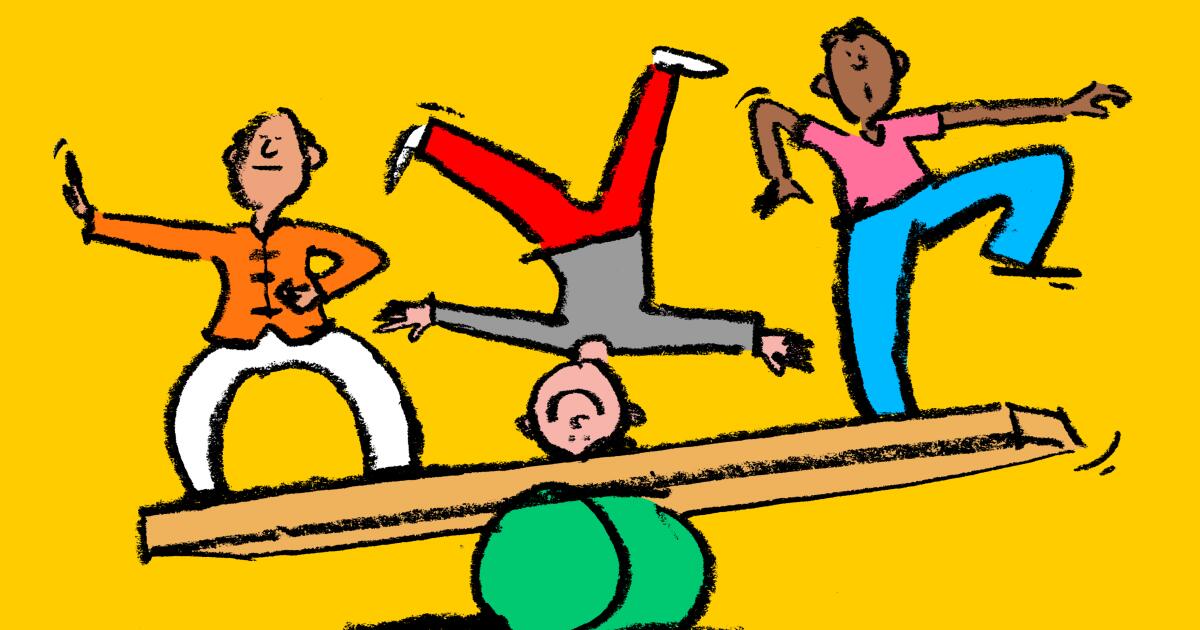
Improving Balance: The Fourth Pillar of Wellness for Healthy Aging
TL/DR –
The article highlights the importance of balance and its role in longevity and overall health. Studies have shown that a lack of balance can predict an 84% higher risk of death within a decade for individuals between 51 and 75 years old. Balance exercises should be incorporated into regular workout routines, as good balance contributes to improved athletic performance, injury prevention, quality of life, and even the prevention of chronic diseases.
How To Boost Your Balance for Longevity
Imagine standing in your living room, balancing on one leg with the other extended behind, arms outstretched. This seemingly simple activity, designed to test balance, reveals crucial insights into your future health. If you’re unable to maintain your balance with your eyes closed, your odds of longevity might not be as assured as you’d like them to be.
For years, cardio, strength training, and stretching have been hailed as the main pillars for extending our health span and lifespan. Balance training, however, is quickly becoming recognized as an equally important aspect of wellness and healthy aging.
Balance is now viewed as a predictor of longevity. A 2022 study published in the British Journal of Sports Medicine, found that participants aged 51 to 75 who couldn’t perform a similar balance test had an 84% higher risk of death within the next decade.
Mike Teater, the director of balance education for Fyzical, a national network of clinics specializing in balance and dizziness, argues that balance is a significant predictor of longevity. This is partly due to a domino effect, where falls lead to injuries, decreased mobility, reduced activity, and higher risk of chronic diseases and social isolation.
Balance is not only important for older adults but also for younger people and athletes for optimized performance, injury prevention, and overall fitness. Good balance fosters a balanced musculoskeletal system, helping to prevent abnormal movement patterns that can lead to chronic injuries.
Balance is a mix of the body’s sensory systems working together – the ocular system (sight), the vestibular system (inner ear), and proprioception (your awareness of where your body is in space). Good balance requires excellent neuromuscular coordination and muscular strength, particularly a strong core, legs, and ankles for stability.
Balance training should be viewed as an integral part of your exercise routine. Whether you’re watching TV or waiting for an Uber, try balancing on one leg for 30 seconds, or walk heel-to-toe to improve your balance.
Experts across sports medicine, personal training, and physical therapy recommend simple routines and simple exercises you can easily do at home to improve your balance.
—
Read More Health & Wellness News ; US News