
Trump’s ‘G2’ Term Reflects U.S.-China Global Power Dynamic, Alarming Allies
TL/DR –
President Trump has been using the term “G2” to refer to the United States and China, suggesting that these two are global peers with equal say in international affairs. However, this idea, first proposed by American economist C. Fred Bergsten in 2005, is not well-received by China or U.S. allies; The former is reluctant to assume more responsibility for global governance, while the latter fear exclusion from important decision-making. Chinese Foreign Minister Wang Yi emphasizes that his country will “never seek hegemony or expansion,” and insists on an “equal and orderly multipolar world.”
Trump’s “G2” Concept Gets a Lukewarm Reception from China
U.S President Donald Trump has been promoting the “G2” concept – a power model focusing on the U.S and China as the world’s leading economies. Introduced by American economist C. Fred Bergsten in 2005, this idea has had mixed receptions over the years.
Trump’s use of the term “G2” in his meeting with Chinese President Xi Jinping highlighted the concept. Trump will revisit this topic in his upcoming China visit.
China sees the “G2” concept as a recognition of its global standing, sparking concerns among other nations about possible exclusion from critical decisions.
China’s Top Diplomat Addresses “G2” Fears
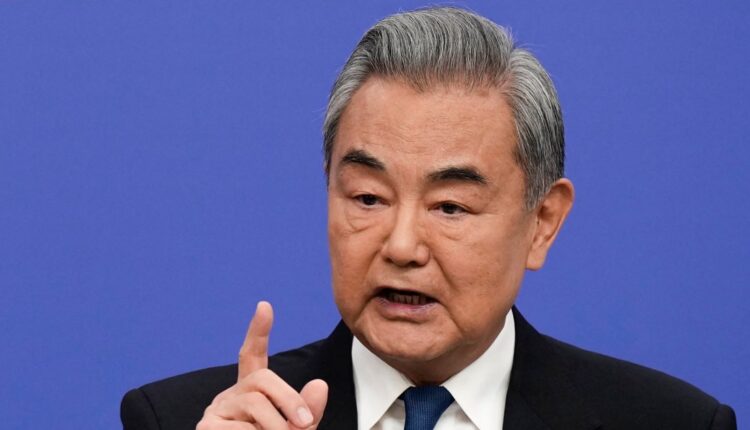
Wang Yi, China’s Foreign Minister, addressed these concerns at a news conference. Emphasizing collective responsibility, he reminded that the world comprises over 190 nations.
China’s stance is not in favor of a “G2” world order. The nation opposes the dominance of major powers and is wary of assuming excessive global governance responsibilities, as evidenced by its hesitation to get involved in Middle-East conflicts.
China’s Vision of an Equal and Orderly World
Wang emphasizes that China will not seek hegemony or expansion. He says China strives for an equal and orderly world, free from the disasters of power rivalries and block confrontations.
Wang’s statements provide insights into China’s worldview and its relations with countries, including the U.S.
U.S-China Relations – A Global Impact
According to Wang, U.S.-China relations have global implications. He warns against mistrust and conflict with the U.S., which could destabilize the world.
Despite the strain from Trump’s global tariffs, Trump and Xi have maintained positive interactions, which Wang believes could stabilize the relationship.
Xi and Trump are expected to meet several times this year, starting with Trump’s visit to China in late March.
Potential Disruptions and China’s Stand on Middle East Conflict
The ongoing U.S.-Israeli strikes on Iran, a Chinese ally, could potentially disrupt the Trump-Xi summit. Wang calls for a halt to the military action, criticizing the conflict and its negative impact.
Wang also condemns the use of force and violations of international law, stating, “The law of the jungle must not return and rule the world.”
—
Read More US Political News