

Connected Healthcare Market to Reach $1,571.22 Billion by 2034, CAGR at 29.6%
TL/DR –
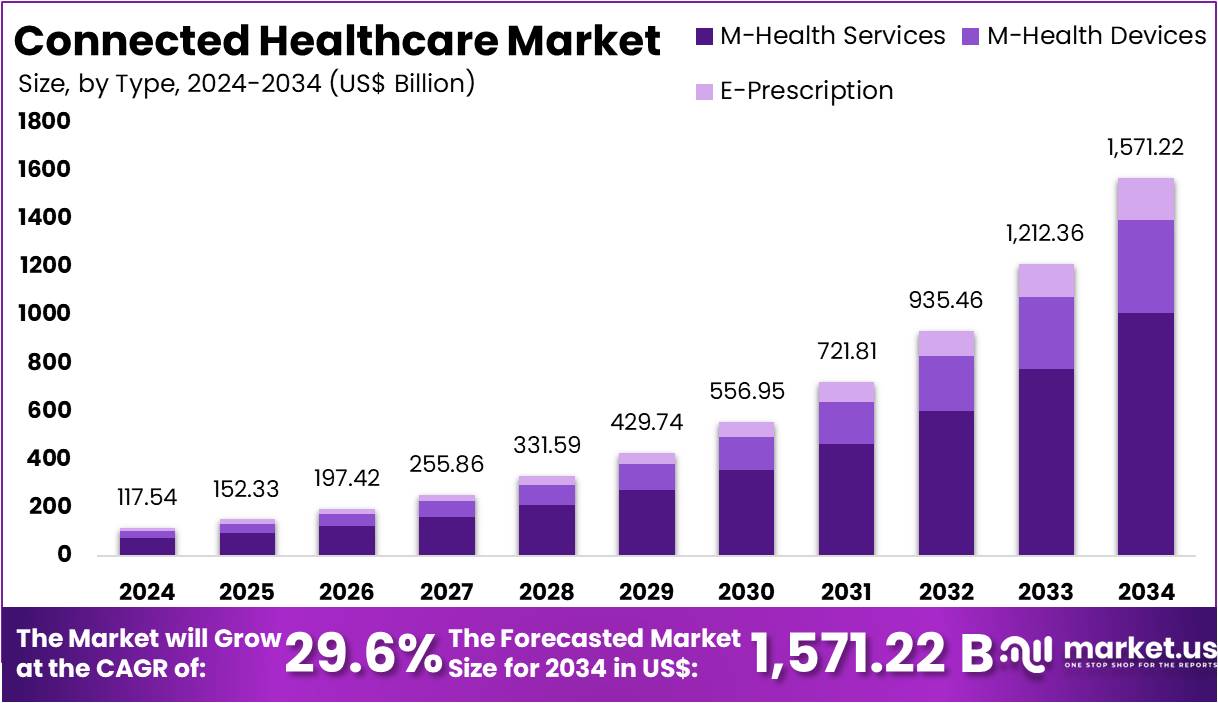
The Connected Healthcare Market size is projected to grow from USD 117.54 Billion in 2024 to USD 1,571.22 Billion by 2034, with a CAGR of 29.6%. The market is dominated by North America, which has more than a 38.80% share and holds a market value of USD 46.78 Billion. The growing adoption of electronic health records (EHRs), wearable devices, telehealth, remote patient monitoring (RPM), cloud computing, and artificial intelligence are transforming healthcare delivery, allowing professionals to access real-time patient information and provide continuous care beyond traditional hospital settings.
Overview
New York, NY – August 11, 2026 – The Connected Healthcare Market is set to expand from US$ 117.54 Billion in 2024 to US$ 1,571.22 Billion by 2034. North America currently leads the market with a 38.80% share valued at US$ 46.78 Billion.
Connected healthcare systems, leveraging internet-based technologies, are transforming medical care delivery. Electronic Health Records (EHRs), telehealth, and artificial intelligence are key elements enabling access to real-time patient data and enhancing healthcare services.
Supported by governmental bodies and healthcare organizations, the trend towards interoperability is ensuring safe health information exchange, improving care coordination and easing administrative burdens.
Key Takeaways
- The Connected Healthcare market is projected to reach US$ 1,571.22 billion by 2034 from US$ 117.54 billion in 2024.
- M-Health Services, due to their cost-effectiveness and growing smartphone usage, dominated the market with a 64.3% share.
- Telemedicine led the market functions, accounting for 35.4% due to increasing patient acceptance and demand for virtual healthcare.
- The Wellness and Prevention segment held the largest 42.5% market share, driven by increasing health awareness and adoption of digital health technologies.
- Hospitals & Clinics emerged as the leading end-user segment, reflecting their extensive adoption of connected healthcare solutions.
Statistical Information
- In 2024, 95.0% of U.S. office-based physicians had adopted an Electronic Health Record (EHR) system, and 83.6% were using a certified EHR.
- In 2021, 37.0% of U.S. adults had at least one telemedicine visit with a healthcare professional during the previous 12 months.
- Among adults aged 65 years and older, 43.3% used telemedicine in 2021, the highest utilization rate among all adult age groups.
- 53.9% of primary care physicians reported using telemedicine for less than 25% of patient visits, while 14.7% conducted 50% or more of visits virtually.
Market Segmentation Analysis
M-Health services dominated the market with a 64.3% share, due to the increased usage of smartphones and access to digital healthcare services.
Telemedicine accounted for 35.4% of the market, driven by the growing demand for virtual care and remote patient monitoring.
The Wellness and Prevention segment led the market with a 42.5% share, reflecting the rising focus on preventive healthcare and healthy lifestyles.
Hospitals & Clinics remained the largest end-user segment, contributing 49.9% to the connected healthcare market.
Regional Analysis
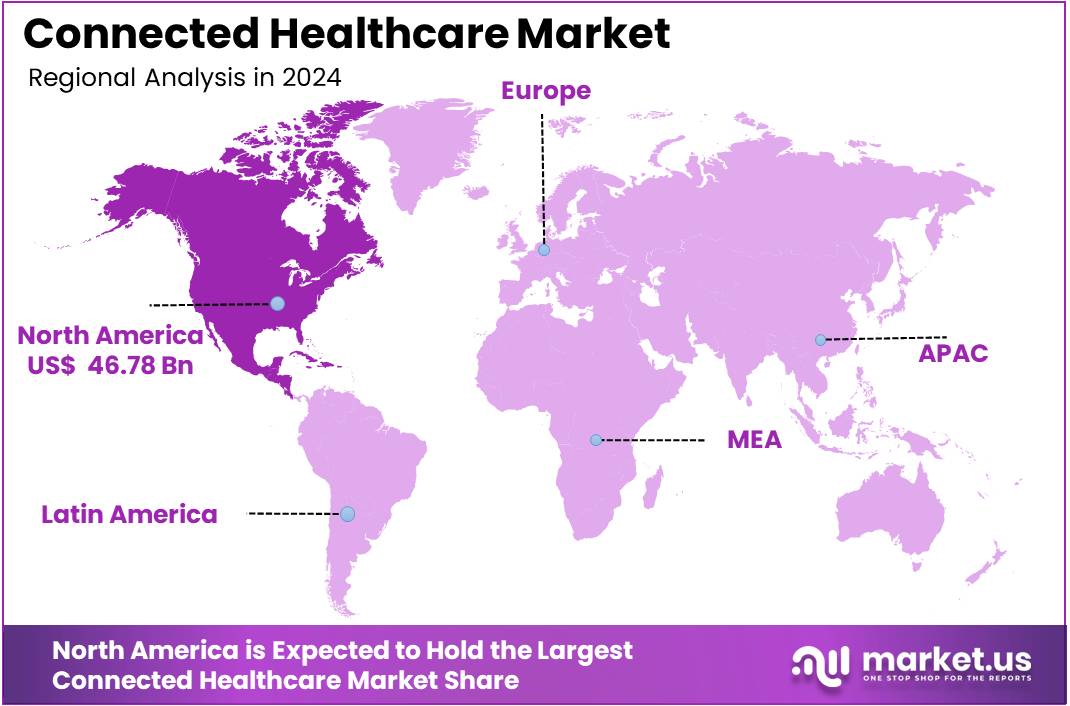
North America dominates the Connected Healthcare market with a 38.80% share, due to its advanced healthcare infrastructure and adoption of electronic health records, telehealth, and remote patient monitoring technologies.
Europe is the second-largest regional market due to strong governmental support for digital health transformation and increasing adoption of telemedicine.
Asia-Pacific is set to register the fastest growth, driven by increasing smartphone penetration and government investment in digital healthcare.
Business Opportunities
The connected healthcare market provides significant opportunities with healthcare providers increasingly investing in digital transformation. The growing adoption of electronic health records, wearable medical devices, and telehealth platforms highlights the demand for secure data integration and AI-powered clinical decision support systems.
Emerging Trends
Interoperability is becoming a major trend as healthcare systems focus on seamless data exchange. Healthcare organizations are increasingly investing in standardized digital health infrastructure to support coordinated care delivery.
Use Cases
Connected healthcare aids in remote chronic disease management, hospital-to-home care, public health surveillance, virtual specialty consultations, and digital care coordination.
Recent Developments
- Philips partnered with Bajaj Integrated Health System in June 2026 to develop a digitally connected healthcare network.
- Teladoc Health completed the acquisition of UpLift in April 2025, expanding its virtual mental health ecosystem.
- In April 2025, Siemens Healthineers and Tower Health launched a 10-year Value Partnership in the United States.
- Teladoc Health announced a definitive agreement to acquire Catapult Health in February 2025, a virtual preventive care provider.
—
Read More Health & Wellness News ; US News