
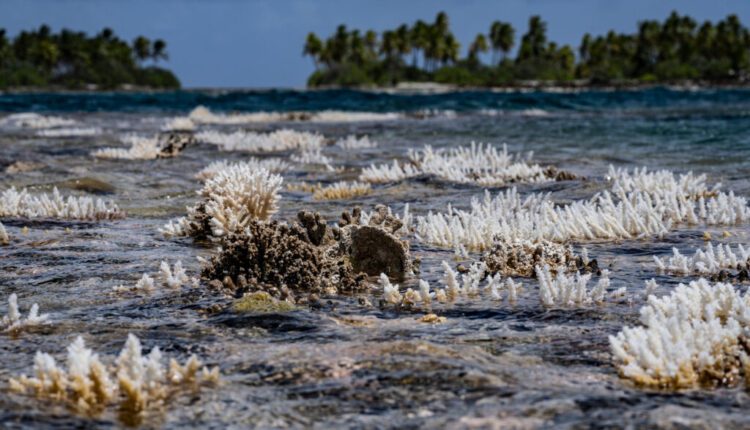
U.S. Military Actions Threaten Guam’s Vibrant Coral Reefs, Researchers Warn
TL/DR –
Researchers claim that the U.S. government’s pursuit of strategic deterrence through increased military activity, including live firing ranges and dredging projects, is accelerating coral reef collapse in Guam. The aim for national security is allegedly causing ecological harm such as driving endangered species to extinction. Adding to the issue is a fundamental misunderstanding of coral taxonomy in the Endangered Species Act (ESA), which fails to recognise corals’ adaptability to different environmental conditions — a loophole that allows the U.S. Navy and businesses to avoid regulation.
Ritidian Point, Guam: A Site of Natural Splendor and Military Might
Located at the northernmost point of Guam, Ritidian Point showcases both its rich biodiversity and military significance. Despite its small size, Guam has a substantial military community of approximately 23,000, making it a critical component of the American military apparatus.
Conflict Between the Pentagon’s Strategic Goals and Guam’s Natural Ecosystems
According to a letter published in Science, the Pentagon’s push for strategic deterrence is negatively affecting Guam’s biodiverse coral reef, an endemic habitat that is already at risk due to ecological harm from fisheries and reefs.
Conservation Efforts Pushed Aside for National Security and Economic Interests
According to Colin Anthony, a doctoral fellow at the University of Tokyo, the U.S. government seems to be softening conservation policies in favor of companies and military interest. The NOAA’s recent proposals prioritize short-term economic benefits over scientific findings and open up vulnerable marine reserves to deep-sea mining, fishing, and military expansion.
Difficulties in Protecting Disappearing Reef-Building Corals
The rapid loss of reef-building corals outpaces the ability of scientists to identify them. Due to the “conservation gap” in ESA policy and the unique nature of corals, these essential species could become extinct before getting properly documented.
Impacts of Military Activities on Indigenous People of Guam
The military’s history of environmental harm has not been forgotten by Guam’s indigenous Chamorro people. The community expresses frustrations over the military’s disregard for the environment and the disproportionate impacts of climate change on island nations like Guam.
Mapping Mineral Deposits and Looking Ahead
In January 2026, NOAA began a survey to map over 30,000 square miles of oceanic territory near American Samoa for critical mineral reserves. Researchers are urging NOAA to reverse its ESA proposals and extend protections to the Acropora genus to prevent loss of marine ecosystems similar to those in Florida.
—
Read More US Political News