
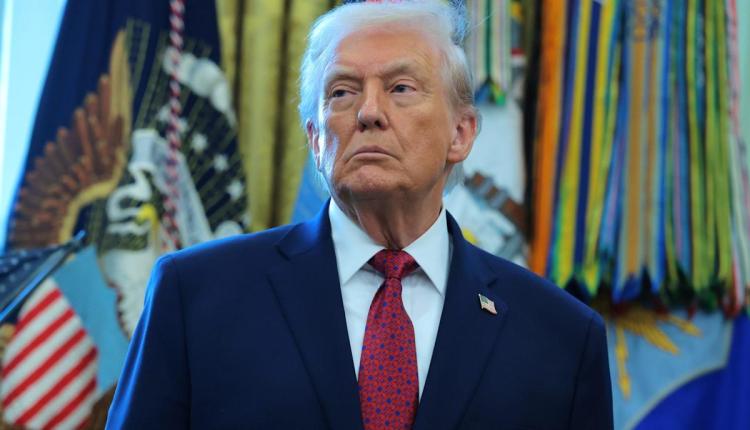
Obama’s Former Top Economist Sympathizes with Trump’s Affordability Struggles
TL/DR –
Former top economist under President Obama, Jason Furman, sympathizes with President Trump’s struggle to address Americans’ affordability concerns, stating that the public has overlooked the fact that gas prices have remained affordable. Despite this, consumer confidence has fallen and Trump’s approval ratings have suffered. Furman also addresses other economic indicators such as inflation and the price of groceries, which have increased by nearly 30% over the past five years, contributing to economic anxieties even with other positive economic signals like a strong GDP growth and wage growth.
Former Obama Economist Sympathizes with Trump’s Affordability Challenge
As President Donald Trump grapples with mounting affordability issues, he finds an unlikely sympathizer in Jason Furman, a Harvard Kennedy School of Government professor and former chair of the Council of Economic Advisers under Obama. Furman highlighted on CNBC’s “Squawk Box” that consumers have disregarded stable gas prices, adding to Trump’s challenge in addressing the affordability crisis.
Despite gas prices hitting their lowest point all year in December, consumer confidence is at its nadir since April with Trump’s economic approval ratings also in decline. Furman expressed surprise at this, noting that gas prices, a key political metric, have remained low.
Further complicating matters, Trump has sent mixed signals regarding the affordability crisis, claiming in a recent primetime address that he inherited an economic “mess” from the Biden administration, while extolling the strength of the economy.
Concerns about inflation and rising grocery prices have also plagued consumers, according to Furman. These anxieties persist despite other positive economic indicators, suggesting a complex economic landscape.
Even though the U.S. saw its strongest economic growth in two years with a 4.3% GDP growth last quarter, the unemployment rate rose to 4.6% in November. Furman sees conflicting economic indicators and notes that consumer focus on high prices remains a significant issue.
While many economists forecast a K-shaped economy, Furman disagrees. He argues that, aside from consistently low prices like gas, robust wage growth continues, a sign of increased spending and productivity. Nonetheless, data indicates wage growth for the lowest-wage Americans has dropped to its lowest in 10 years.
However, KPMG chief economist Diane Swonk associates strong GDP growth with a K-shaped economy, where businesses grow without hiring, a trend that could be worsened by AI replacing jobs. She sees current productivity gains as a result of companies’ reluctance to hire.
—
Read More Health & Wellness News ; US News